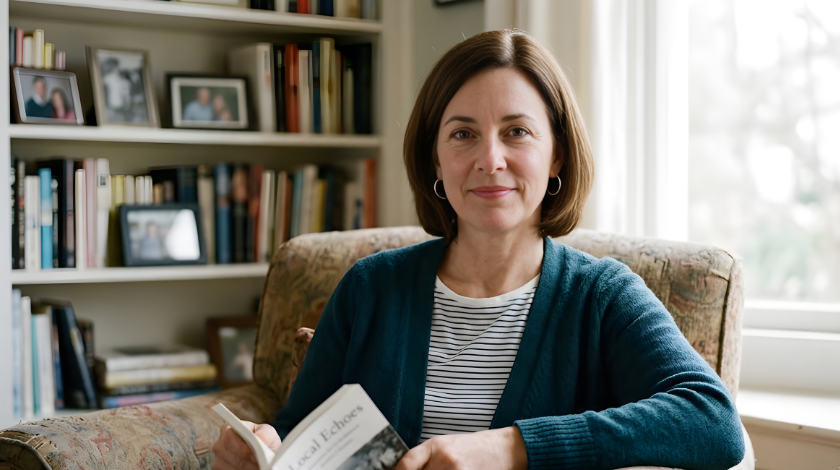
Sandra Cheskey: The Gitchie Girl Survivor Story and 40-Year Silence Broken
Some stories stay buried for decades, not because they are forgotten, but because the pain of telling them feels heavier than the weight of silence itself. For Sandra Cheskey, that silence lasted forty years. Forty years of walking with her head down, of avoiding eye contact with strangers, of feeling the judgmental stares from people who wondered why she lived when four others died. This is the story of a thirteen-year-old girl who went out for a campfire on a November night in 1973 and became the sole survivor of one of the most brutal mass murders in Midwestern history.
The Summer That Started Everything
To understand what happened at Gitchie Manitou, you have to go back to the summer of 1973, when Sandra was just a kid trying to find her place in the world. She had moved to the Tea area near Sioux Falls, South Dakota, from Minnesota not long before, and she was navigating seventh grade at Harrisburg School while dealing with a home life that was far from stable. Her mother had remarried a man who seemed to have little patience for raising four kids from a previous marriage. The stepfather’s solution was to shuffle the children into foster care and eventually to a mission school in Marty, South Dakota. That experience, while difficult, forced Sandra to grow up faster than most kids her age. She was already accustomed to being around older teenagers, which explains why, at thirteen, she did not think twice about hanging out with boys four or five years her senior.
That summer, everything changed when she went to the drive-in theater in Sioux Falls. She was walking back to her car from the concession stand when she saw him. Roger Essem was seventeen years old, handsome in that way that makes a young girl’s heart skip, and instead of walking past her, he stopped. They talked. He asked for her phone number. And just like that, Sandra Cheskey fell into her first real crush. Looking back now, as a grandmother in her sixties, she probably recognizes how innocent those moments were. Three or four dates followed, usually with Roger’s friend, Stewart Baade, along for the ride since he had a blue van and provided the transportation. The age gap seemed irrelevant to Sandra. She was mature for her years, perhaps too mature, shaped by experiences that had already taken her childhood away.
A Saturday Night in November
November 17, 1973, started like any other Saturday. Roger called and invited Sandra to join him and his friends at Gitchie Manitou State Preserve, a wooded area just over the Iowa border, about an hour east of Sioux Falls. The place had a reputation among local teenagers as a place to hike, have bonfires, and drink beer without adult supervision. That night, the group consisted of Roger Essem, seventeen; Stewart Baade, eighteen; Stewart’s younger brother Dana Baade, fourteen; and Michael Hadrath, fifteen. They loaded into Stewart’s blue van with plans to build a campfire, smoke a little marijuana, play guitar, and just be teenagers doing what teenagers do.
Sandra remembers the music of that era, the Grass Roots, Black Sabbath, and Led Zeppelin, songs that now she cannot listen to because they transport her back to that night instantly. The group found a spot in the woods, built their fire, and settled in for what they thought would be a few hours of escape. None of them could have predicted that three men were watching them from the darkness, armed with shotguns and bad intentions.
The Fryer Brothers: Predators in the Woods
Allen Fryer was twenty-nine years old, the oldest of three brothers from Sioux Falls. His siblings James, twenty-one, and David, twenty-four, followed his lead that night. The brothers had been at Gitchie Manitou earlier, supposedly poaching deer or perhaps just looking for trouble. When they spotted the teenagers around the campfire, they noticed the marijuana. That detail would later become their twisted justification for what followed, as if smoking pot somehow made four murders understandable.
The brothers retrieved their shotguns from their pickup truck and positioned themselves on a ledge overlooking the campsite. Then they made their move, approaching the teenagers while posing as narcotics officers. They blustered about confiscating the drugs, creating confusion and fear. The first shots came suddenly. Roger Essem died where he stood. Stewart Baade was wounded but not fatally. Michael Hadrath took a bullet in the arm. The teenagers scattered, trying to find cover behind trees, but the Fryer brothers had them trapped.
What happened next was calculated and cruel. Allen Fryer ordered the surviving teenagers to walk up a path at gunpoint. He separated Sandra from the others, putting her in his pickup truck while his brothers remained behind with the three wounded boys. As Allen drove away with Sandra, she looked back and saw James and David Fryer lining up Michael Hadrath, Dana Baade, and Stewart Baade in front of the blue van. Those were the last moments she ever saw her friends alive.
The Farmhouse and the Impossible Choice
The Fryer brothers met up at an abandoned farmhouse near Hartford, South Dakota, about an hour later. What occurred there has been documented in court records and in Sandra’s own words, though the details remain as horrific today as they were fifty years ago. James Fryer raped thirteen-year-old Sandra Cheskey while his brothers were present. The assault was brutal, dehumanizing, and designed to assert total dominance over a child who had already witnessed her boyfriend’s murder.
When it came time to dispose of the witness, Allen Fryer told his brothers he would handle it. He put Sandra back in his truck and drove away. But something unexpected happened during that drive. Allen was not the smartest criminal, as investigators would later note, and somewhere between the farmhouse and the highway, he began to see Sandra as a person rather than as a disposable problem. She remained calm. They talked. Whether it was her youth, her composure, or some flicker of humanity in a man who had just participated in four murders, Allen Fryer could not bring himself to kill her. He drove her home and dropped her off late that night.
Sandra could not sleep. She lay awake worrying about her friends, wondering if they had made it out of the woods. The next morning, she tried calling the Essem house around eight o’clock. When Roger was not home, she and a friend hitchhiked into Sioux Falls and called again. This time, one of Roger’s brothers told her to stay where she was, that something terrible had happened. A Sioux Falls couple test-driving a new car had discovered the bodies of Michael, Stewart, and Dana along the roadside at Gitchie Manitou that morning. Roger’s body was found at the original campsite the following day.
Doubt, Disbelief, and the Search for Justice
The days that followed were almost as traumatic as the night itself. Investigators questioned Sandra repeatedly, poring over mug shots, asking her to scribble down details, driving her along gravel roads trying to locate the farmhouse where she had been assaulted. At first, there was skepticism. Police officers were not cruel, but they were frustrated. In their minds, the story seemed unbelievable. Why would three murderers let a witness go? Why did only one of them assault her? Why would Allen Fryer drive her home instead of killing her? These questions, born from professional experience with criminals who rarely show mercy, made them doubt the thirteen-year-old victim sitting in their squad cars.
Sandra remembers being so unhappy with their disbelief that she stopped looking out the window during their drives. She felt helpless, angry, and increasingly isolated. Then, about ten days after the murders, everything changed. As she sat in the car with Sheriff Craig Vinson, they drove past a farmhouse with a big red gasoline tank standing next to the garage. Sandra recognized it immediately. That was the place. As they sat there, stunned by the discovery, Allen Fryer drove slowly past in the same brown pickup truck he had used on the night of the murders. Sandra pointed and told the sheriff, “That’s him. That’s the boss.”
The arrest happened quickly after that. Allen Fryer was pulled over and taken into custody. His brothers James and David were arrested shortly afterward. The case against them was largely built on Sandra’s testimony, which she delivered in court despite being just 13 years old. The Fryer brothers were convicted and sentenced to life in prison without the possibility of parole. All three remain incarcerated today, having spent nearly five decades behind bars for their crimes.
Walking with Her Head Down
Justice in a courtroom, however, does not equal healing in real life. Sandra Cheskey returned to a community that did not know how to handle her trauma. Classmates shunned her, instructed by parents who did not want their children associating with “that girl from Gitchie Manitou.” Rumors spread that she was somehow responsible for the murders, that she had survived because she was in on the plan, that a thirteen-year-old girl had manipulated three grown men into killing her friends. The logic made no sense, but fear rarely does.
Sandra dropped out of school within months. For years, she had nightmares so severe that her mother would crawl into bed with her, even when Sandra was fifteen years old. There was no counseling offered, no trauma therapy, no victim support services. The 1970s were a different era, one in which children were expected to be quiet about terrible things, and adults pretended that ignoring pain would make it disappear. Sandra married at age twenty-six and built a family, becoming a mother, aunt, and eventually grandmother. But she never spoke publicly about that night. She walked with her head down, just as a lawyer had advised her to do during the trial, so journalists could not get a clear photograph. The posture became permanent, a physical manifestation of shame she should never have felt.
Breaking the Silence
The turning point came after forty years, when Sandra read a memoir by Phil Hamman called “Under the Influence.” Hamman had been a classmate of the murdered boys, and his book included memories of the Gitchie Manitou case. Sandra reached out to him with a proposal. She wanted to tell her story, not for fame or attention, but for her grandchildren who would eventually Google her name and find horrific details she had never shared. She wanted her nieces, who were approaching the age she had been that night, to understand what happened from her own words rather than from court documents and newspaper archives. And she wanted to help other trauma survivors know that survival was possible, even when it felt impossible.
Phil Hamman and his wife, Sandy, worked with Sandra to publish “Gitchie Girl: The Survivor’s Inside Story of the Mass Murders That Shocked the Heartland” in 2016. The book detailed not just the murders but Sandra’s life afterward, the suicidal depression, the symptoms of post-traumatic stress disorder, the decades of silent suffering. A companion book, “Gitchie Girl Uncovered,” followed in 2019, providing additional information about the killers, the investigation, and court transcripts. The response overwhelmed Sandra in the best possible way. At book signings, dozens of people approached her to share their own stories of trauma and survival. She realized she was not alone, that silence had been protecting her from judgment but also isolating her from connection.
Finding Peace at Gitchie Manitou
In 2013, on the fortieth anniversary of the murders, Sandra returned to Gitchie Manitou State Preserve for the first time since that night. She went with her husband and friends, retracing each terrifying moment, standing at the spots where her friends had died, trying to set her ghosts free. She also reunited with former Sheriff Craig Vinson, then ninety-four years old, who hugged her and told her something she had needed to hear for decades. “I never thought you were a bad girl,” he said. “And I checked on you through the years to make sure you were doing all right.”
That validation mattered. Sandra has said that for forty years she walked with her head down, but now she can finally walk with her head up. She wants her grandchildren to know that Grandma wasn’t doing anything wrong that night. None of them were. They were just teenagers going out for a campfire, making choices millions of teenagers make, when they encountered evil no one could have predicted.
The Legacy of Survival
Today, Sandra Cheskey stands as a testament to human resilience in the face of unimaginable horror. Her story matters not just because it is true crime history, but because it illustrates how the justice system and society at large often fail child victims. The skepticism she faced from investigators, the isolation from her community, and the lack of mental health support were additional traumas layered on top of the violence she survived. Her decision to speak out after forty years offers a roadmap for other survivors who believe their stories are too shameful to share.
The Fryer brothers remain in prison, their lives consumed by the choices they made on a November night fifty years ago. Roger Essem, Stewart Baade, Dana Baade, and Michael Hadrath remain forever young in photographs and memories, their potential cut short by violence. And Sandra Cheskey, the girl who survived, continues to tell her story so that others might find the courage to tell theirs.
Conclusion
Sandra Cheskey’s journey from a thirteen-year-old survivor to a grandmother and author is one of the most remarkable stories of resilience in American true crime history. The Gitchie Manitou murders shocked the heartland in 1973, but the aftermath for the sole survivor proved equally devastating in different ways. For forty years, Sandra carried a burden society helped create through its doubt and judgment. Her decision to break that silence with the “Gitchie Girl” books has transformed her from a victim into an advocate, offering hope to trauma survivors everywhere. Her story reminds us that survival is not just about living through violence, but about finding the strength to reclaim your narrative and walk with your head held high.
Frequently Asked Questions (FAQ)
Who is Sandra Cheskey? Sandra Cheskey is the sole survivor of the Gitchie Manitou mass murders that occurred on November 17, 1973, in Lyon County, Iowa. She was thirteen years old when three brothers attacked her and four teenage friends, killing the four boys and kidnapping and assaulting Sandra before releasing her.
What happened at Gitchie Manitou in 1973? Five teenagers from Sioux Falls, South Dakota, were attacked by brothers Allen, James, and David Fryer at Gitchie Manitou State Preserve. Four teenagers were murdered, and Sandra Cheskey was kidnapped, assaulted, and eventually released. The Fryer brothers were later convicted and sentenced to life in prison.
How did Sandra Cheskey survive? After being separated from her friends, Sandra was taken to an abandoned farmhouse where she was assaulted. When Allen Fryer drove her away, presumably to kill her, he instead released her after they talked during the drive. Investigators believe Allen saw her as a person rather than a target and could not complete the murder.
What books did Sandra Cheskey write? Sandra Cheskey co-authored “Gitchie Girl: The Survivor’s Inside Story of the Mass Murders That Shocked the Heartland”, published in 2016, and “Gitchie Girl Uncovered,” published in 2019, both with Phil and Sandy Hamman.
Where is Sandra Cheskey now? Sandra Cheskey lives as a private citizen, having built a family as a mother, aunt, and grandmother. She has become an advocate for trauma survivors after breaking her forty-year silence about the Gitchie Manitou murders.
Why was Sandra Cheskey called the Gitchie Girl? The nickname originated from her association with the Gitchie Manitou murders. For decades, she was known in whispers and rumors as “that girl from Gitchie Manitou,” often facing unfair judgment and isolation from her community.